Chapter 1: Supporting Data and Findings
(Chapter I: Community, School, & Student Profile)
Maris Sella School received notification via a letter dated February 2, 2017, that the school met all the criteria and was granted Initial Accreditation Status through June 30, 2020.
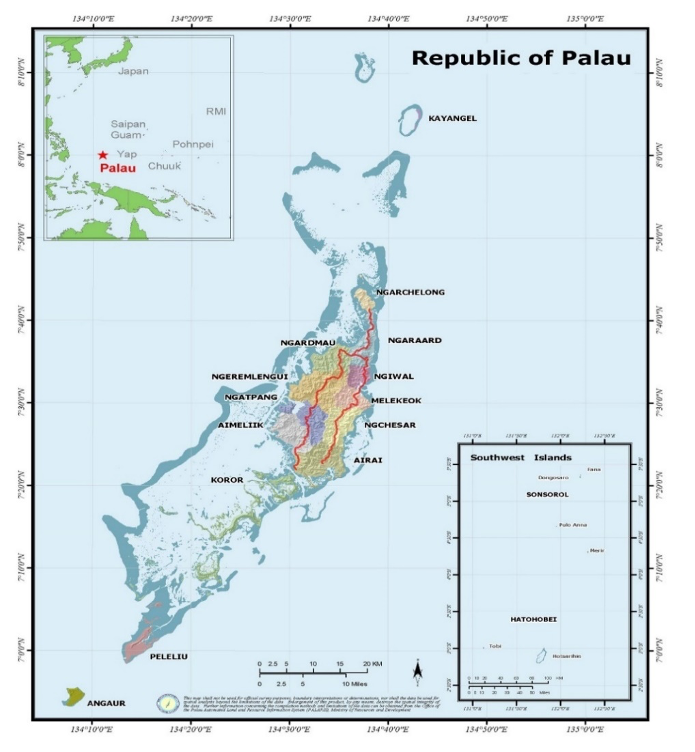
The Republic of Palau (ROP) is a 325 mile-long archipelago (161.94 sq. miles of land) running on a northeast-southwest axis, comprised of some 300 islands located approximately 7º and 20 minutes North Latitude and 134º and 28 minutes East Longitude. It is the westernmost island group in Micronesia (Micronesia means “tiny islands.”) Palau’s main islands consist of Kayangel, Babeldaob, Koror, Peleliu, Angaur, and the Southwest Islands, namely, Sonsorol, Fana, Pulo Anna, Merrir, Hatohobei, and Helen Reef. The Southwest Islands are approximately 350 miles southwest of Koror. Babeldaob, the largest island of Palau is approximately 37 miles long and 14 miles wide. All the main islands of Palau and a few rock islands are inhabited except for the Southwest island of Helen Reef.
The Community
History
After World War II, Palau was administered by the United Nations Trusteeship Council for fifty years under the Strategic Trust Territory Administration of the United States. Despite efforts to unify all Micronesia Islands, Palau, in 1978, opted for independence rather than join the Federated States of Micronesia. Palau became the last strategic Trust Territory of the Pacific Islands in Micronesia to approve its Compact of Free Association with the United States of America. The Constitution of Palau required a 75% approval votes through a referendum to approve the Compact of Free Association since there were sections in the agreement that violated the nuclear free zone and eminent domain articles of the Palau Constitution. Although the United States President, Ronald Reagan, signed the 6th Compact of Free Association agreement and the US Senate ratified it in1986, the 75% Palau constitutional requirement prevented the approval until an amendment was made. Finally, on October 1, 1994, Palau became an independent republic under the Compact of Free Association with the United States.
Demographics
According to Palau 2015 Census of Population, the population was 17, 661 with male population at 9,433 and female at 8,228. Of the total population, 65% lives in Koror, 14% in Airai, and the remaining 21% is spread throughout the other states in Babeldaob and the outlying states.
The age structure of the population shows that children under 5 years old account for 7% of the population, 5-14 years old at 14%, and those at 15-19 years old is at 7%. People aged 20-29 years is at14%, 30-39 years old at 16%, 40-49 years old at 16%, 50-59 at 14%, while those aged 60 years old and over make up the remaining at 12%.
Language and Literacy
Both Palauan and English are recognized as official languages of Palau. The Southwest Islands have a native tongue that is not related to Palauan language but the people are Palauan citizens. About 64.7% of the population speaks Palauan. Most Palauan elders speak both Palauan and Japanese as they grew up during the Japanese era. The rest of the population speaks their own native languages and English as a mode of communication amongst the different languages.
According to the Palau National Statistics office, literacy is defined as the ability of those between the ages of 15 and over to read and write. Based on this definition, literacy on the island remains very high at approximately 99%. This means that almost everyone at the age of 15 years and over can read and write either in Palauan or English or both languages.
The Republic of Palau Public Law (RPPL No. 8–55) mandates the instruction of Palauan language and culture from grades 1 to 12 in all schools in Palau. The law states that every school chartered in the Republic of Palau or funded by public funds must offer instruction in reading and writing of Palauan language consistent with the Palauan Orthography, as advanced by the Ministry of Education (MOE) and the Palau Language Commission.
Culture & Religion
Palauan culture remains vibrant and widely practiced. It is still evident, especially during major cultural ceremonies like new birth, marriage, deaths and funerals, new homes, and obtaining a chiefly title. Palau’s culture is unique and complex in that it takes years and years of practice to gain full knowledge and skills in order to take part, and to successfully fulfill the obligations and requirements of any given customary practices. To this end, the national government also requires that Palauan traditions, culture, and history be taught in both public and private schools.
The country is predominantly Christian, which is made up of mostly Roman Catholic and various Protestant denominations. There is also an indigenous religion called Modekngei. Forty-five percent (45%) of the population are Roman Catholic, 26% are Evangelical, 7% are Seventh Day Adventist, and 6% are Modekngei. Muslims or Hindus are at 7%. The remaining 10% profess to other denominations, or no religious affiliation.
Economy & Employment
The economy of Palau continues to rely on foreign aid and local revenue generated from the tourism industry, agriculture, fishing, and income tax. There are other industries that are also important sources of local revenue for the country, but tourism and fishing industries generate the most revenue. In 2011, tourist arrivals, for the first time, reached over 100,000. Since then, the average number of tourist arrivals has been stabilized at approximately 128,000 each year. While this may seem positive, Palau is experiencing a decline in the number of tourist arrivals. According to Palau Visitors Authority (PVA), tourist arrivals reached its peak at 163,909 tourists in 2015. After that, in the last 3 consecutive years, it’s been declining, posting an average negative growth at (-13.4%). Despite the decrease, PVA in its January 2019 report, indicated that the prospect of tourist arrivals is positive due to the recent opening of new direct flights to Palau and an increase in number of flights out of Taiwan to Palau.
Foreign-owned fishing industries export fish mainly to Japan and other countries. They contribute directly to Palau’s revenue through fishing license fees and taxes. Agriculture, on the other hand, is still mainly subsistent. The national government and many states have taken the lead of pushing for industrial farming in providing food security and the health of the nation.
Palau National Government remains the biggest single employer in the republic. It employs approximately 35% of the total Palau workforce. Tourism and the other private business sectors both account for half (52%) of the workforce. The unemployment rate according to the Palau National Statistics Office was 1.7% in 2015.According to the Ministry of State, there were 7,302 foreigners with valid work permits working in Palau during the year 2018.
Most of these workers are employed in private business sectors, and many of them come from the Philippines, China, South Korea, and Bangladesh. Together they make up 88% of the total foreign workers in Palau. For Palau to be self-sufficient, the national government should help develop private business sectors in order to alleviate its burden of providing most of the employment. It also needs to develop its local human resources to avoid having to bring in large numbers of foreign workers to the island to meet the demands for labor. In view of these important national needs, the government considers education as an essential aspect of its policy making process.
Education
Historically, children received their first form of education in the home from immediate family members. They were taught Palauan core values focused on appropriate conduct and received lessons on the various roles and responsibilities for boys and girls. When boys reached the age of 18, they joined the village men’s clubs to learn various arts, trade and warfare skills. At the age of 16, girls joined the village women’s clubs and were taught the customary practices of taro farming, food production, dancing, chanting, etc. Palauan fundamental principles of respect, honor, integrity and community service were constantly reinforced in all aspects of their lives. For generations, Palauan society maintained a traditional education system through oral history (instruction) and customary practices (application).
Education is one of the primary concerns of the National Government. Palau’s Constitution provides for free and compulsory education from grades 1 to 12. Public Law (RPPL 5-2 § 7) states that children between the ages of 6 and 17 shall be required to attend school. The law further stipulates that parents of children not enrolled in school are in violation of RPPL 5-2 § 7 and must pay a fine of not more than $100.00 or serve jail time. To this end the Ministry of Education (MOE) provides free education from grades 1 to 12 in public schools to all students.
Trends on Educational Attainment
The following chart shows the educational trends based on percentage of the population aged 25 years and over, during 5 census years.
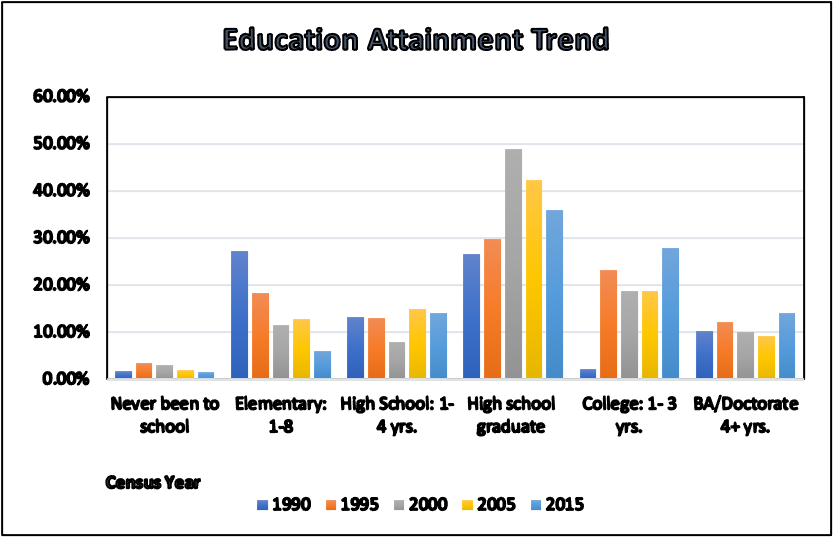
The percentage of the population 25 years and over that has attained 1-8 years of elementary school, and those that have attained high school diploma has decreased over a period of 10 years. On the other hand, those who have never been to school and those who attained 1-4 years of high school but did not graduate remain relatively the same throughout the 15-year period. Those who attained 1-3 years of college showed a significant increase in the year 2015. For the percentage of the population 25 years and over that have attained BA or doctorate degree has also increased in 2015 by 14%.
Church History
The Palau Islands, part of the Western Caroline Islands, were governed by Spain from 1885 to 1899. The first missionaries, Spanish Capuchins were entrusted with the task of opening a mission in the Western Carolines in the last part of the 19th century. In April 1891, two Capuchin priests and two brothers arrived to open the first permanent mission. In 1892, a new church was built in Koror and dedicated to the Sacred Heart and in January 1892, the first mission school was opened. The Spanish Capuchins struggled to keep a stronghold in Palau, even though Germany had acquired possession of the Western Carolines in 1899.
During the German administration 1899-1914, the German Capuchins arrived in force in January 1907, soon after the departure of the Spanish missionaries. During the next several years a school for girls was erected. Three Franciscan sisters who arrived in 1909 were put in charge of the girls’ school in Koror with an enrollment of 50 female day students. The school, which had always been the mainspring of church work, grew to an enrollment of about 100.
In October 1914 two Japanese warships arrived in Palau not long after the outbreak of World War I, to seize the islands in the name of Japan. The Capuchin missionaries, under trying circumstances continued their work for another year. Finally, in early October 1915, the German Capuchins were ordered to leave within a month, thus closing the schools and churches.
It was more than five years before missionaries returned to Palau. Under a mandate by the League of Nations, the islands came under Japanese control. On March 16, 1921, a Japanese steamship brought four Spanish Jesuits to Palau. Despite Japan’s earlier hostility towards missionaries, the Japanese government in 1920 petitioned the Vatican for other Catholic missionaries to replace the German Capuchins they had evicted, but with the proviso that they be from a neutral nation. The Jesuits were not allowed to open a mission school, so most of their efforts at evangelization took the form of catechetical programs for students attending public school. Attendance was minimal, yet the Jesuits continued to believe that if they could somehow only open a Catholic school, despite restrictions imposed by the Japanese government, they might still save their young Catholics. A new cement church in Koror, Sacred Heart, which still serves today, was dedicated on Easter Sunday 1935. Already strained relations between the Japanese government and the missionaries took a turn for the worse when the war began. The six Jesuits in Palau continued doing what pastoral work they could with assistance from a few devoted Palauan families.
Following Japan’s defeat in World War II, the Caroline Islands became part of the United Nations Trust Territories under U.S. administration, known as Trust Territory of the Pacific Islands (T.T.P.I.). In December 1946, two Spanish Jesuit missionaries arrived. The ensuing years saw rebuilding, using structures such as Quonset huts from military surplus that were used for catechism classes, choir practice and church meetings. The arrival of three American Maryknoll sisters in September 1948 meant that a Catholic school could be opened for the first time since 1915. A jumbo Quonset hut served as the first Mindszenty School initially for kindergarten and first grades. By the fall of 1950, the school had expanded to six full grades, and later, with the opening of Maris Stella School, became an intermediate school for grades 7-9.
Maris Stella School was opened in September 1957 for grades 1-6, boys and girls with an enrollment of 186. The first principal was Sister Katherine George Razwad, a Maryknoll sister from the United States. Six Palauan lay teachers, who had earned an intermediate school diploma comprised the teaching staff.
These students in grades 1-6 occupied part of the parish hall and the old Quonset hut, and later lower Maris Stella building, formerly used as Mindszenty School. Subjects taught were reading, spelling, math, Palauan social studies and religion.
Students whose families lived on other islands in the Palau district lived with relatives in Koror during the school year to enable them to receive a Catholic elementary education.
Beginning in 1960, the Mercedarian Sisters of Berriz, a Spanish order, took over the administration of the school. From 1960, with Sister Angelica Salaverria, MMB as the principal, other Mercedarian Sisters from Palau, Guam and the United States succeeded as school administrators. In 1982, Mr. Felix Okabe became the first Palauan lay principal. Upon his retirement in May 2012, two Palauan lay women, Mrs. Thelma R. Ngirameketii and currently Ms. Lorenza Olkeriil succeeded as the school’s administrators.
The first graduating class of 1958 was comprised of 29 students, 15 girls and 14 boys. School year 1963-64 saw the addition of 7th and 8th grades. At the first 8th grade graduation in 1965, there were 40 students, 23 girls and 17 boys receiving diplomas.
In 1960, a two-story concrete building, directly behind Sacred Heart Church, was completed to accommodate an increased enrollment. A one-story building was erected behind the concrete structure in 1995 to house kindergarten students. The large classroom space also housed its own indoor restroom and an indoor play space. The large play area was later renovated in 2001 to create the school library and office space for the registrar and finance officer.
In addition to Spanish, American and Micronesian Mercedarian Sisters, Palauan and Filipino lay teachers were also on the faculty in the early years. In November 1966, the first U.S. Peace Corps Volunteers in Palau district were assigned as teachers of English as a Second Language. PCV teachers at Maris Stella were followed by American Jesuit International Volunteers and occasionally American lay teachers who taught English and a variety of other subjects. The current faculty is comprised of Palauan, Filipino and American lay teachers, and two Micronesian Mercedarian Sisters from Chuuk, FSM.
Maris Stella Faculty and Support Staff Statistics
The numbers of faculty and support staff have remained fairly consistent during the past three years. During school year 2016-2017, there were 20 on the teaching staff (11) 55% Palauan, (5) 25% Filipino, (3) 15% Federated States of Micronesia and (1) .05% American. The principal is a Palauan citizen and the seven members of the support staff are all Palauan citizens. During the 2017-2018 school year there was a total of 19 on the teaching staff. Of these (12) 63% are Palauan, (3) 16% Filipino, (2) 11% Federated States of Micronesia, (1) .05% Japanese and (1) .05% American. The principal is a Palauan citizen and seven of the support staff are Palauans and 1 is Filipino.
During the 2018-2019 school year there were 19 members of the faculty. (11) 58% Palauan, (4) 21% Filipino, (2) 11% Federated States of Micronesia, (1) .05% Japanese and (1) .05% American. Members of the support staff are seven Palauans and 1 Filipina.
Maris Stella Student Statistics
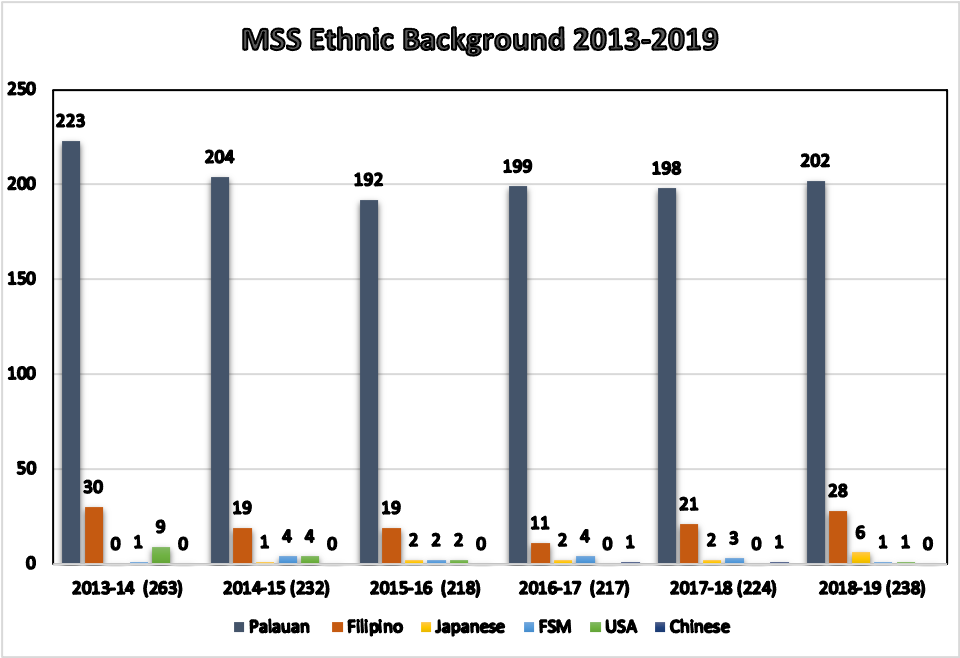
The MSS total student population for school year 2016-2017 was 235: by ethnicity 91% Palauan, 6% Filipino, 2% FSM, 1% Japanese and other Asian. The total population in school year 2017-2018 was 222: by ethnicity 88% Palauan, 9% Filipino, 1% FSM and 1% Japanese. The total population in school year 2018-2019 was 237: 85% Palauan, 12% Filipino, 2% Japanese and 1% American or FSM. (chart--)
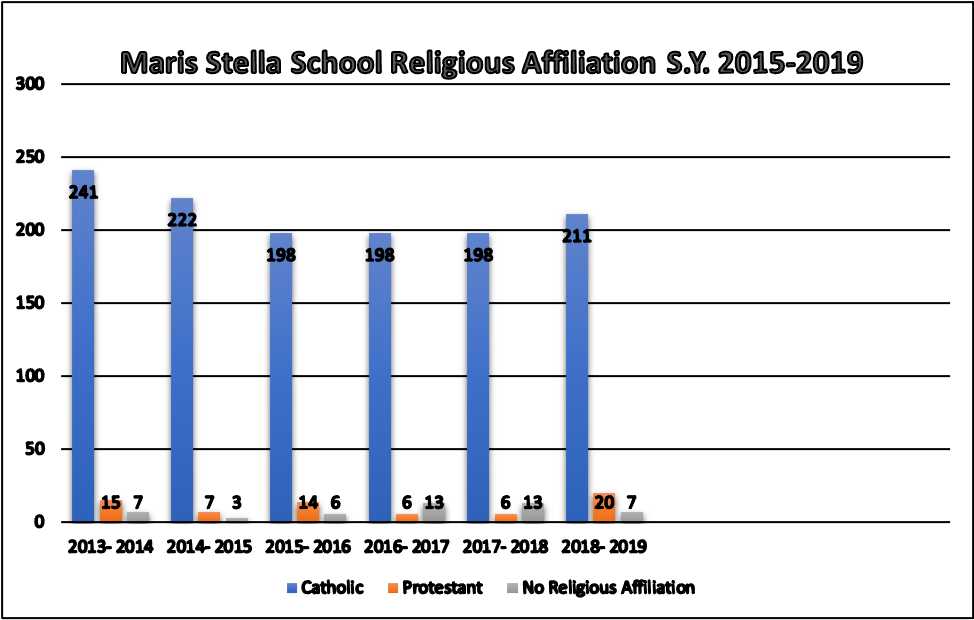
The Maris Stella student population for school year 2016-2017 identified themselves by religion background as follows: 92% Catholic, 2 % Protestant and 6% with no religious affiliation. In school year 2017-2018 91 % identified themselves as Catholic, 5% as Protestant and 4% with no religious affiliation. In school year 2018-2019 89% identified themselves as Catholic, 6% as Protestant, 3% with no religious affiliation, and 2% as Seventh-Day Adventist. (chart)
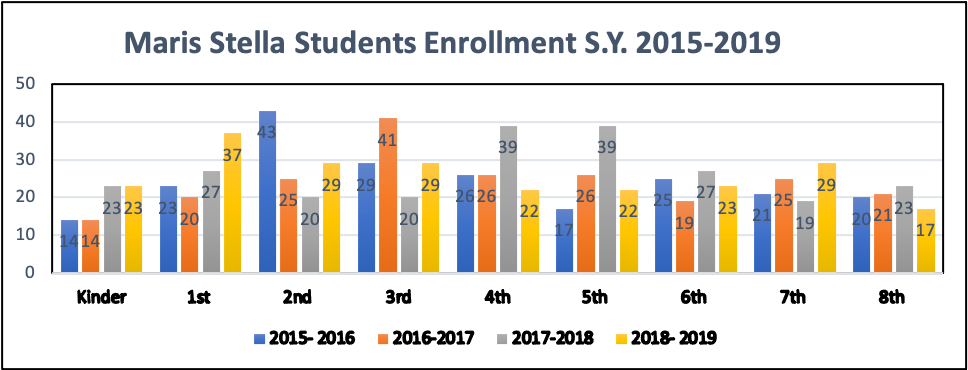
Maris Stella Students Enrollment
| Grade | 2015-16 | 2016-17 | 2017-18 | 2018-19 |
|---|---|---|---|---|
| Kinder | 14 | 14 | 23 | 23 |
| 1st | 23 | 20 | 27 | 37 |
| 2nd | 43 | 25 | 20 | 29 |
| 3rd | 29 | 41 | 20 | 29 |
| 4th | 26 | 26 | 39 | 22 |
| 5th | 17 | 26 | 39 | 22 |
| 6th | 25 | 19 | 27 | 23 |
| 7th | 21 | 25 | 19 | 29 |
| 8th | 20 | 21 | 23 | 17 |
| Total Enrollment | 218 | 217 | 224 | 238 |
Maris Stella School Religious Background 2013-2019
| 2013-2014 | 2014-2015 | 2015-2016 | 2016-2017 | 2017-2018 | 2018-2019 | |
|---|---|---|---|---|---|---|
| 263 | 232 | 218 | 217 | 224 | 238 | |
| Catholic | 241 | 222 | 198 | 198 | 203 | 211 |
| Protestant | 15 | 7 | 14 | 6 | 13 | 20 |
| No Religion | 7 | 3 | 6 | 13 | 8 | 7 |
Maris Stella School Ethnic Background 2013-2019
| 2013-2014 (263) |
2014-2015 (232) |
2015-2016 (218) |
2016-2017 (217) |
2017-2018 (224) |
2018-2019 (238) |
|
|---|---|---|---|---|---|---|
| Palauan | 223 | 204 | 192 | 199 | 198 | 202 |
| Filipino | 30 | 19 | 19 | 11 | 21 | 28 |
| Japanese | 0 | 1 | 2 | 2 | 2 | 6 |
| FSM | 1 | 4 | 2 | 4 | 3 | 1 |
| USA | 9 | 4 | 2 | 0 | 0 | 1 |
| Chinese | 0 | 0 | 0 | 1 | 1 | 0 |
Math HERO
Following a recommendation from the Ministry of Education (MOE), Maris Stella School implemented Singapore Math instruction for grades 1-8 beginning in school year 2016-2017. A math specialist from MOE spoke to the Maris Stella School board members, recommending the school adopt Singapore Math. In school year 2017-2018, Ms. Moeri Mizutani, a Math Specialist with JICA (Japan International Cooperation Agency) was assigned to Maris Stella to teach Singapore Math to grades 1-4 as well as work with math instructors already at the school. The school administration decided to implement Singapore Math instruction for grades 1-8; grade 5-8 instructors continue to use existing books and supplementing with Singapore math materials. One- hour workshops for parents together with students in grades 1-4 were conducted in October and December 2017, to enable parents to understand the Singapore math process and thus better assist their children. A second JICA volunteer, Ms. Masako Kondo replaced Ms. Mizutani in school year 2018-2019.
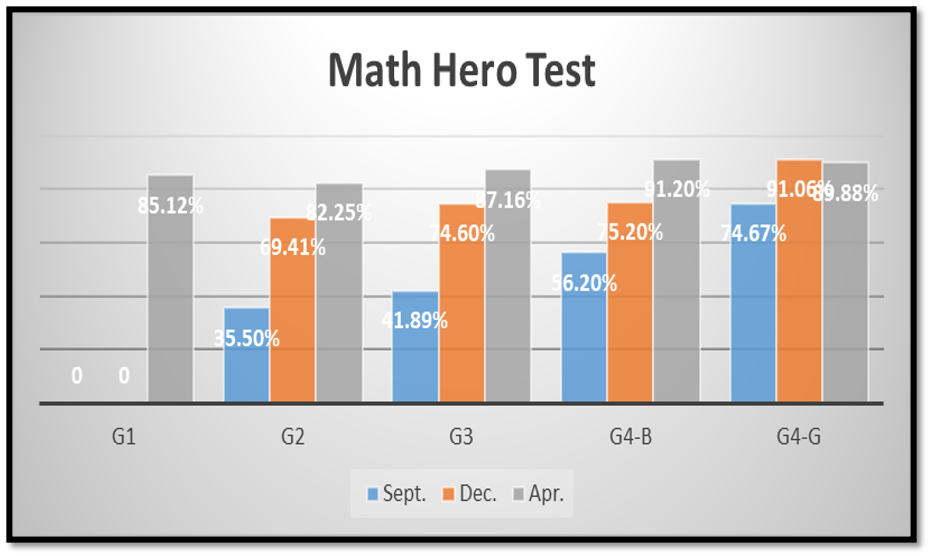
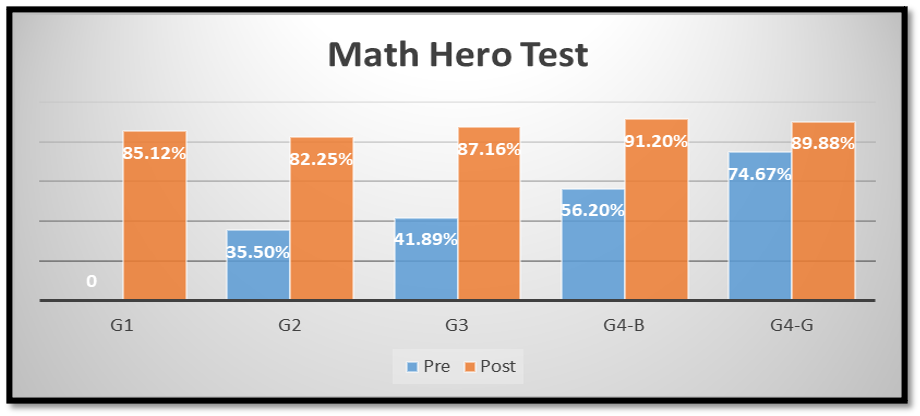
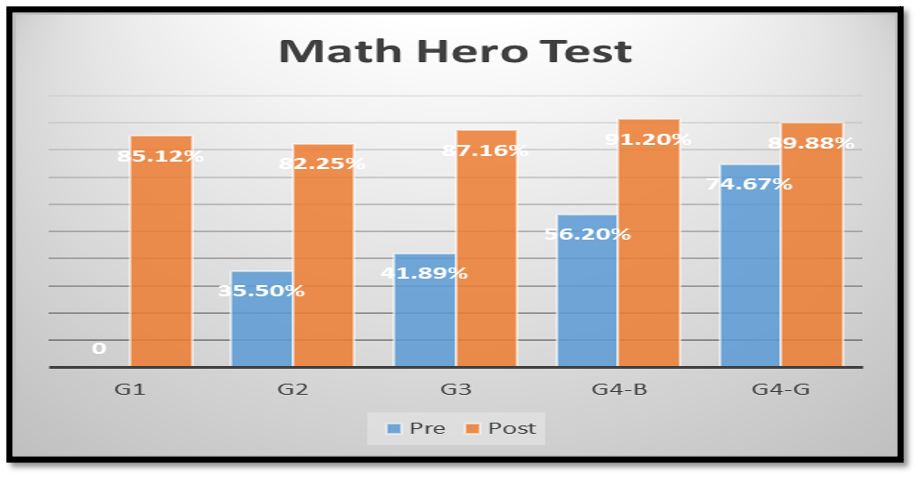
Math Hero Activity drills were held daily, 3-5 minutes, at the beginning of the 45 minutes math period, to reinforce skills. Pre-Test and Final Test results show significant improvement at each grade level tested. (Charts)
Math Hero Test Results School Year 2017-2018
Pacific islands Literacy and Numeracy Assessment
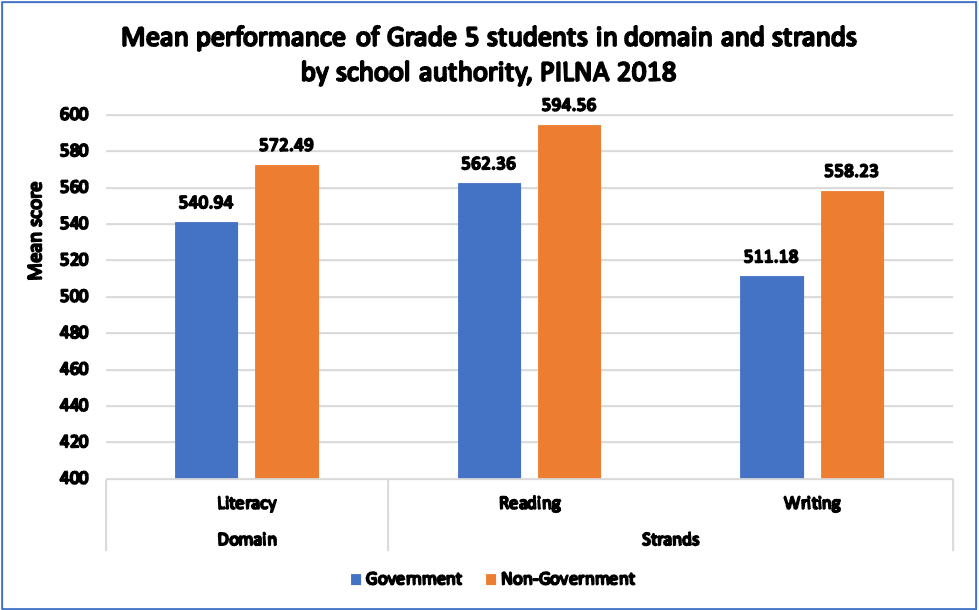
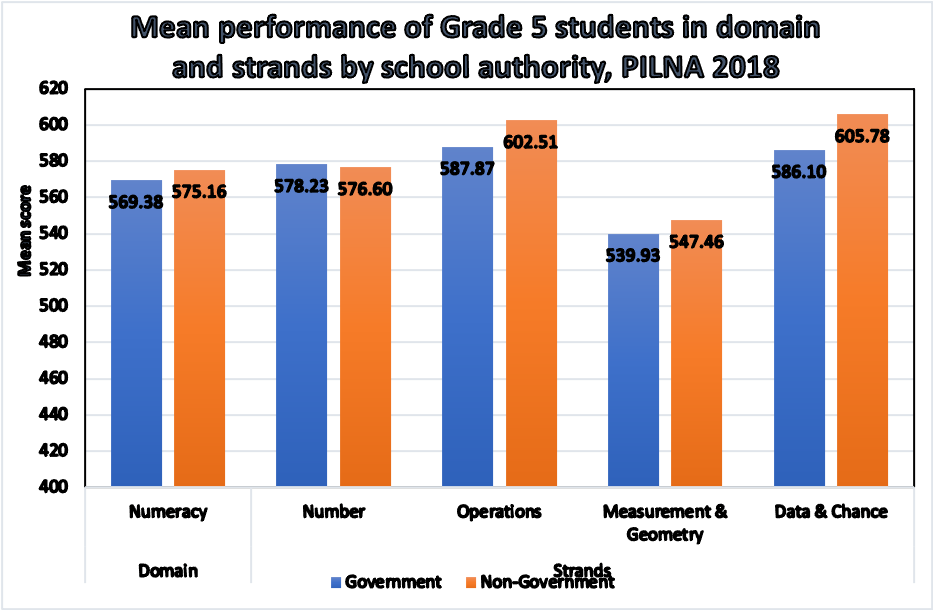
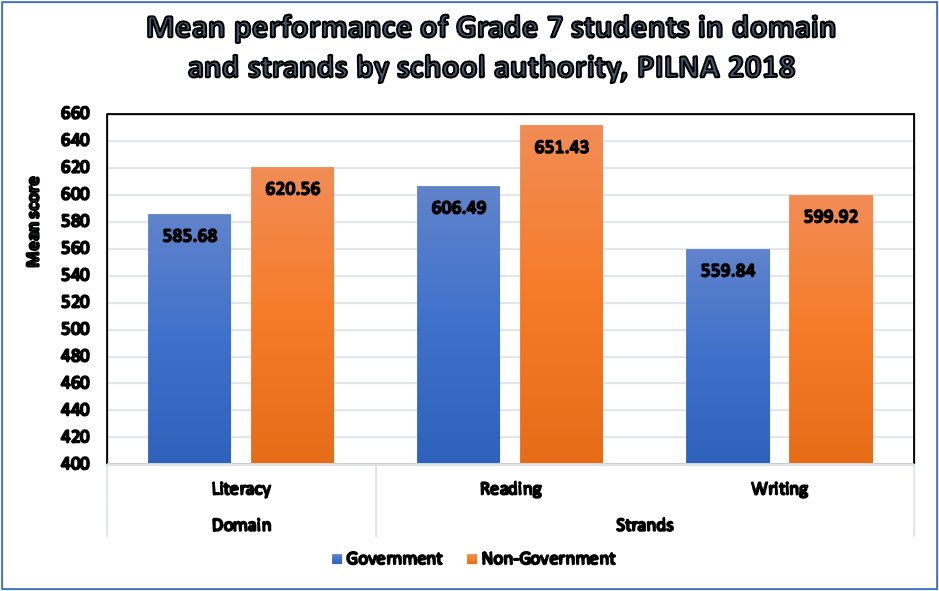
The Pacific islands Literacy and Numeracy Assessment (PILNA) is a measurement of regional standards based on a common scale; it is a regional collaborative model administered in fifteen countries. The assessment is administered every two years to Maris Stella students in grades 5 and 7. Maris Stella School participated in SY 2016-2017 and SY 2018-2019. Results from the assessment administered in October 2018 show that in all strands of the Numeracy component, with the exception of the number strand, non-government schools in Palau, of which Maris Stella is one of two, scored significantly higher than the government schools. The same is also shown in the Literacy component. The results of all 5th grade students’ performance showed 99.7% of them performing at or above expected proficiency level for numeracy. 98.1% of Grade 7 students performed at or above the expected minimum proficiency level.
Operation strand had the highest performance when compared to the other strands (number, measurement & geometry and data & chance.) Grade 7 students in non-government schools performed better than those in government schools in the numeracy domain and strands. Grade 7 students in urban schools performed better than those in non-urban schools in the numeracy domain and strands. Numeracy performance is better than the region and Small Island States (SIS). Results show an increase in the level of student performance in numeracy over the period 2012 to 2018. Results in Literacy performance show students in Grade 5 scored 95.7% at or above the expected minimum proficiency level. 98.2% of Grade 7 students performed at or above the expected minimum proficiency level. Reading strand had a higher performance when compared to the writing strand. Girls demonstrated higher levels of literacy achievement than boys. and 95.9% performing at or above for literacy. Students in non-government school performed better than students in government schools in the literacy domain and strands. Students in urban school performed better than students in non-urban schools in literacy domain and strands. Literacy performance is better than the region and Small Island States (SIS). Results show an increase in the levels of student performance in literacy over the period 2012 to 2018.

Stanford Achievement Test (SAT) 10
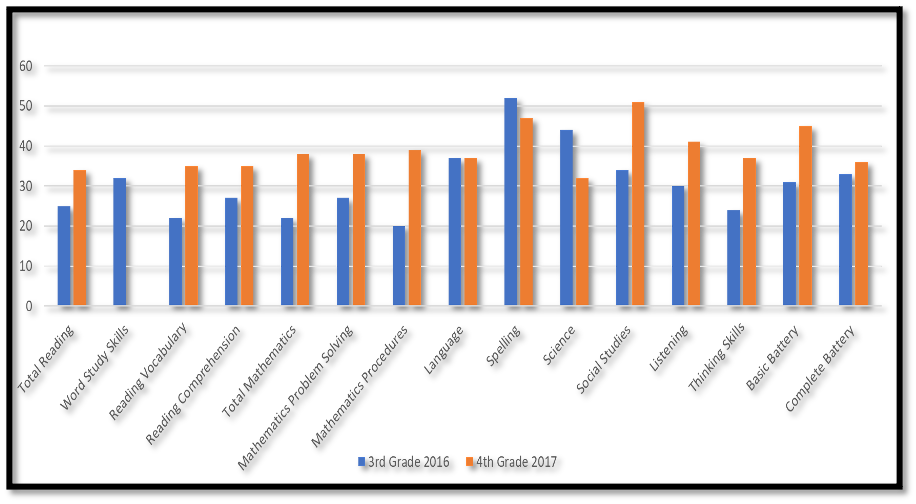
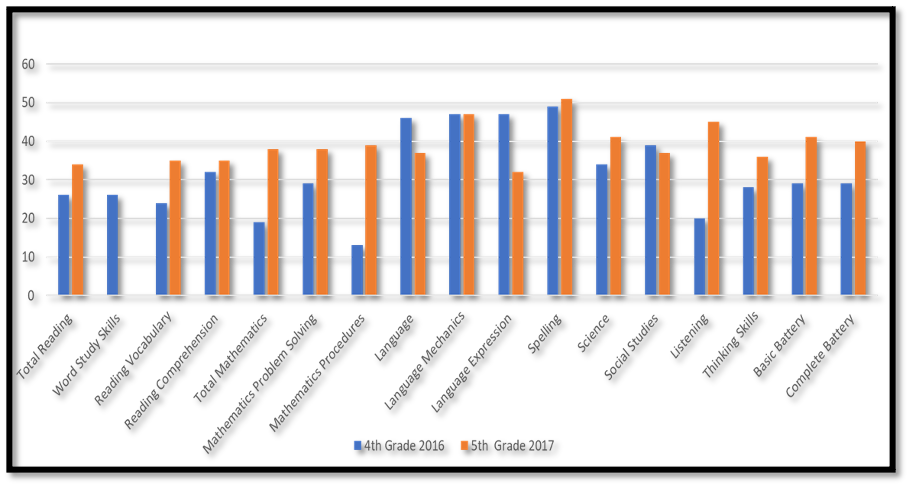
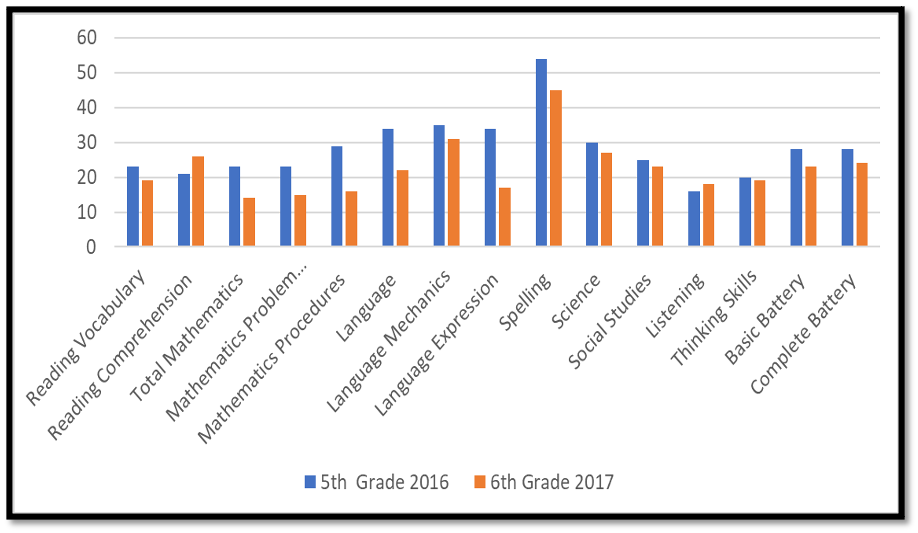
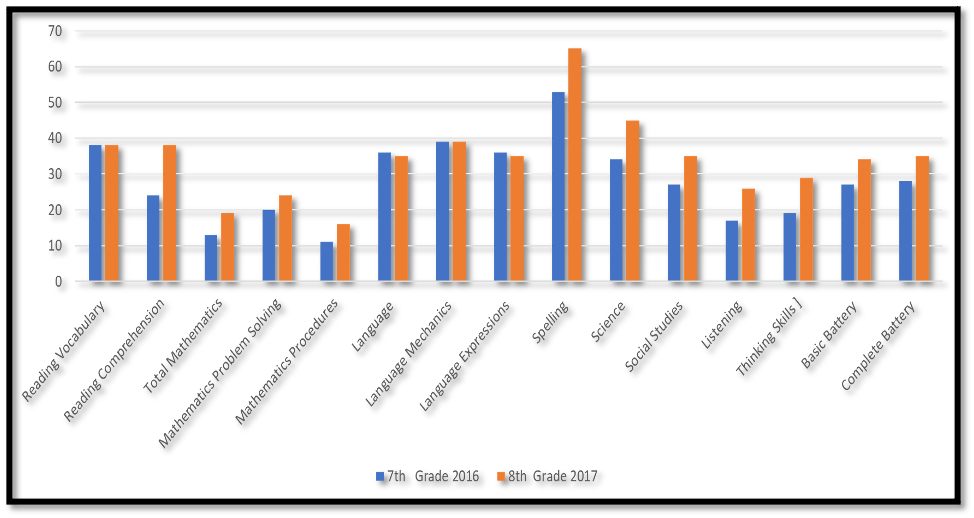
The SAT 10 was administered to grades 1-8 in SY 2016-2017. This assessment was undertaken under the guidance of the Ministry of Education to all public and non-public schools in Palau. Beginning in SY 2017-2018, the Ministry of Education determined another assessment would better serve their needs for specific information to improve curriculum instruction for grades 3-12 to public and non-public schools. The Iowa Assessments were administered to grades 3-8 at Maris Stella in SY 2017-18 and SY 2018-19. Results indicate (add assessment dialog).
MSS STUDENTS’ STANDING RELATIVE TO THE 2007 U.S. NATIONAL NORM GROUP SAT 10 COMPARATIVE PERFORMANCE
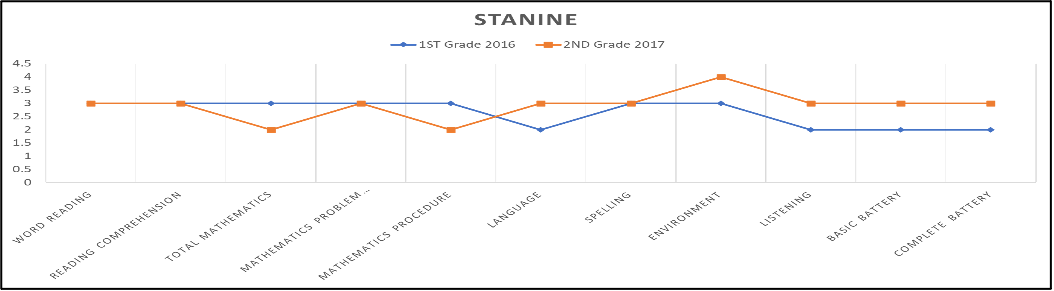
    1st  Grade 2016 -        Strength:  Above Average (None)
                          Weaknesses: All Strands are Below Average
    2nd Grade 2017 –    Strength:  Above Average (None)
Weaknesses: -All Strands are Below Average

    2nd Grade 2016 -   Strength:  Above Average (None)
                     Weaknesses: All Strands are Below Average
    3rd Grade 2017 –  Strength:  Above Average (None)
                              Weaknesses: -All Strands are Below Average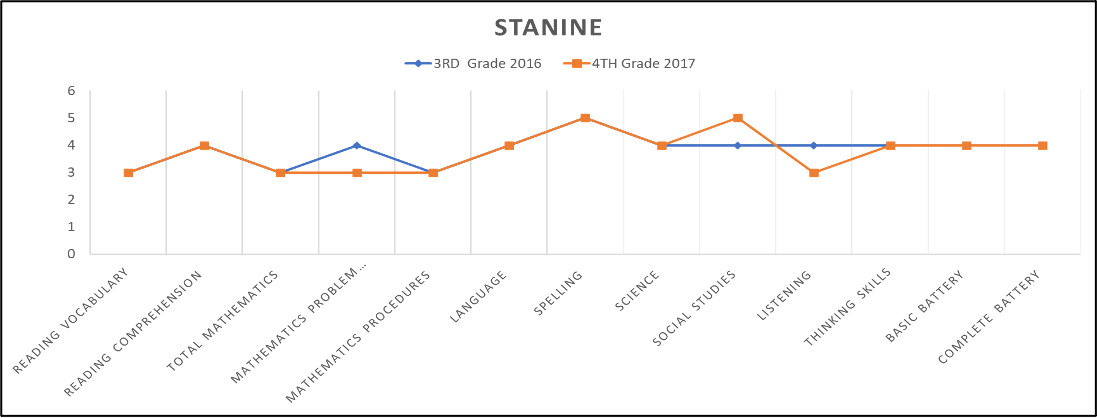
3rd Grade 2016 - Strength: Above Average (None)
Weaknesses: Below Average: Reading Vocabulary, Total Math, Math Procedures
4th Grade 2017 – Strength: Above Average (None)
Weaknesses: Below Average: Word Study Skills, Reading Vocabulary,
Total Mathematics, Math Problem Solving, Math Procedures, and Listening.

4th Grade 2016: Strength – Above Average (None) Weaknesses – Below Average: Total Mathematics, Math Procedures, and Listening 5th Grade 2017: All Strands are average.

5th Grade 2016: Strength – Above Average (None) Weaknesses – Below Average: Total Reading, Reading Comprehension, Listening, Thinking Skills 6th Grade 2017: Strength – Above Average (None) Mathematics Problem Solving, Language Expression, Listening, Thinking Skills
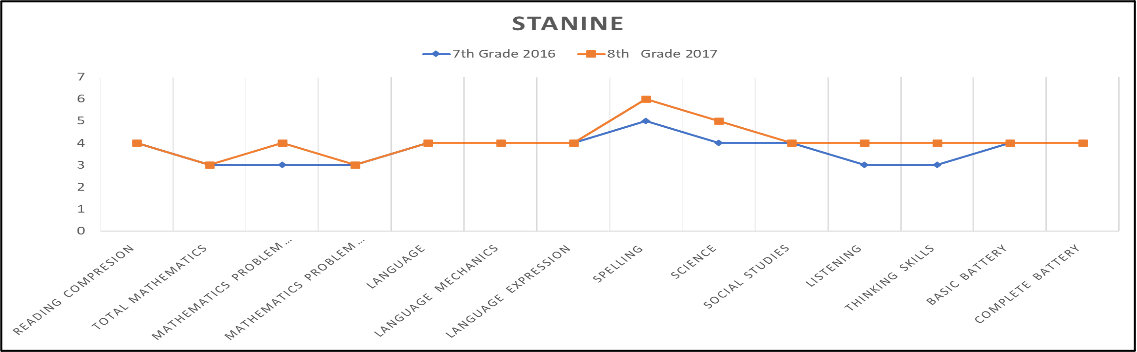
7th Grade 2016: Strength – Above Average (None) Weaknesses – Below Average: Total Mathematics, Mathematics Procedures, Listening,Thinking Skills 8th Grade 2017:Strength – Above Average (None) Weaknesses – Below Average: Total Mathematics, Mathematics Procedures

8th Grade 2016: No Strengths (Above Average) or Weaknesses (Below Average)
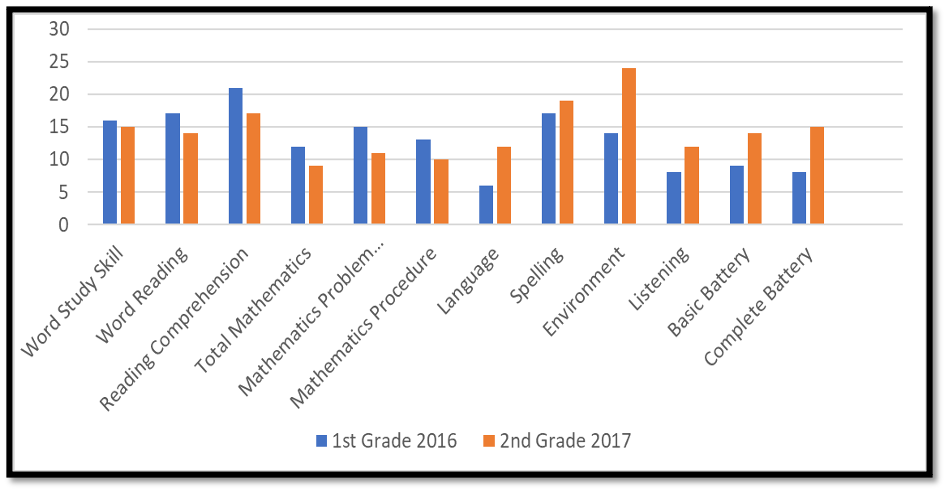
MSS STUDENTS’ STANDING RELATIVE TO THE 2007 U.S. NATIONAL NORM GROUP SAT 10 COMPARATIVE PERFORMANCE
NATIONAL PERCENTILE RANK



IOWA Assessments
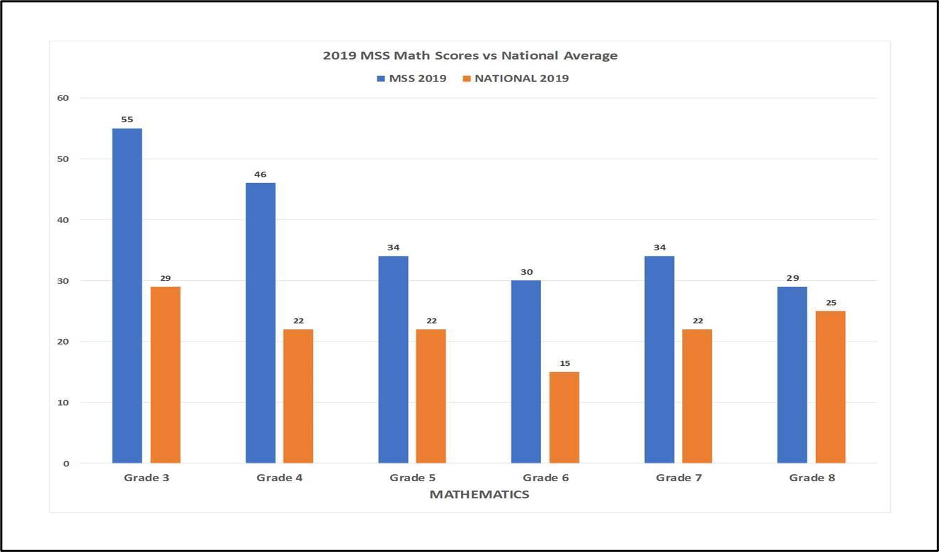
Math Scores v. National Average
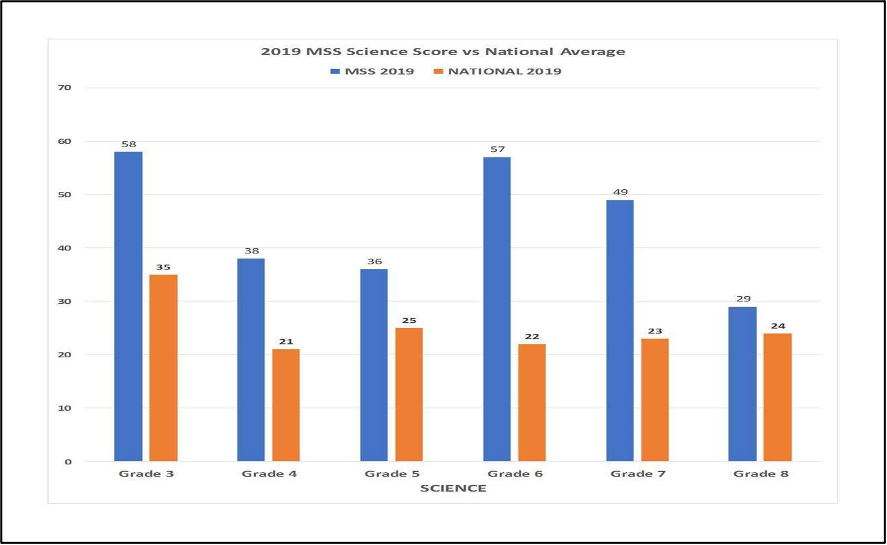
Science Scores v. National Average
ELA Scores v. National Average

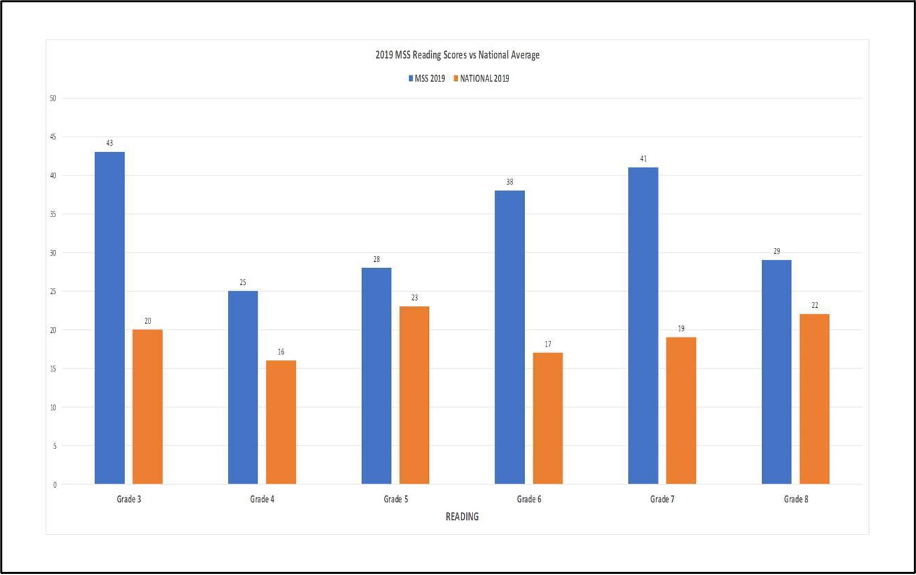
Reading Scores v. National Average
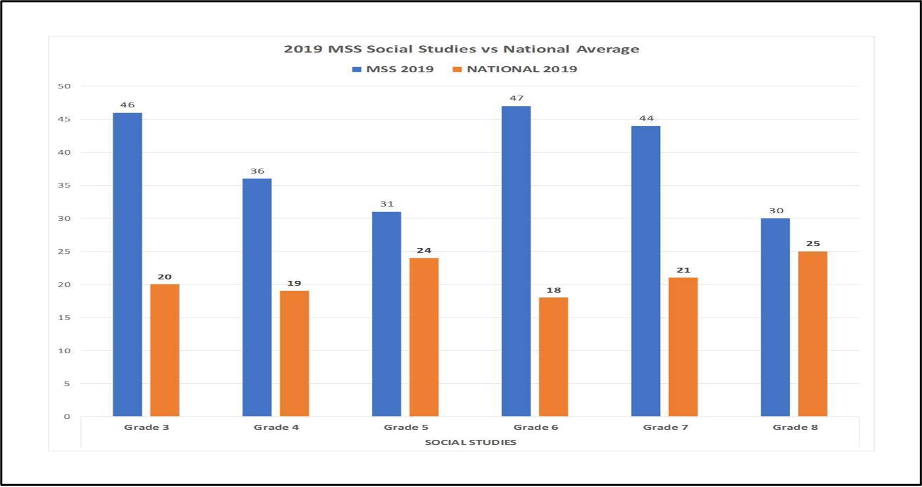
Social Studies Scores v. National Average